
 EN
EN
 ar
ar bg
bg hr
hr cs
cs da
da nl
nl fi
fi fr
fr de
de el
el hi
hi it
it ko
ko no
no pl
pl pt
pt ro
ro ru
ru es
es sv
sv tl
tl iw
iw id
id lv
lv lt
lt sr
sr sk
sk sl
sl uk
uk vi
vi et
et hu
hu th
th tr
tr fa
fa ms
ms hy
hy ka
ka ur
ur bn
bn mn
mn ta
ta kk
kk uz
uz ku
ku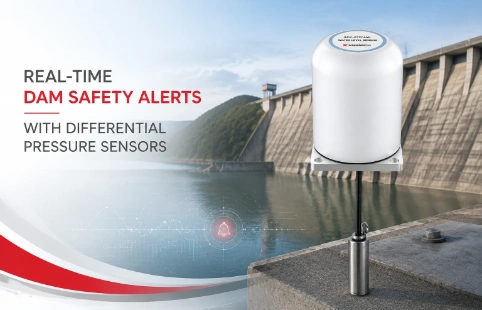
Real-Time Dam Safety Alerts with Differential Pressure Water Level Sensors
Key Takeaways An alert chain needs more than a sensor: define field in...

0.1 mm Resolution Tipping Bucket Rain Gauge Standard
Rainfall measurement doesn’t need to be complicated. A 0.1 mm tipping bucket rain gauge turns every 0.1 mm of precipitation into a countable pulse — straightforward, repeatable, and trusted in weather stations and hydrological networks worldwide. Kingmach supplies these standard-resolution gauges to engineers and researchers who want reliable data without overpaying for unneeded precision. Whether you’re monitoring a small watershed or upgrading a municipal flood-warning system, the 0.1 mm step size hits the balance between sensitivity and durability that the World Meteorological Organization recommends for many common applications. The gauge’s simplicity also means lower maintenance and fewer parts that can fail. In practice, it becomes a low-drama workhorse: install it, connect it to your logger, and let it count bucket tips through rain and dry spells alike. Kingmach's version of this classic instrument brings thoughtful construction and easy customization. Options like different funnel sizes, materials, or output settings are available, making it fit into both standard racks and custom setups. Field teams appreciate the straight-forward installation — level the base, secure the mount, and wire the reed switch. Data quality starts with a solid measurement chain, and the 0.1 mm bucket is often the most sensible first link.
Technical Detail
A tipping bucket rain gauge with 0.1 mm resolution is often called the 'standard' for a reason: it meets the accuracy requirements of most professional weather monitoring, while keeping cost and complexity low. Inside, a pair of pivoting buckets collects water until one side tips, triggering a magnetic reed switch. Each tip represents 0.1 mm of rainfall. This binary counting method works well with dataloggers, PLCs, and simple event counters. Kingmach manufactures these gauges with corrosion-resistant materials — typically stainless steel and UV-stabilized plastics — to survive long-term outdoor exposure. The reed switch is hermetically sealed, and the axle uses hardened bearings to minimize wear. You’ll find this model in agricultural weather stations, flood forecasting systems, and research catchments. The 0.1 mm bucket is also the basis for many custom designs: Kingmach can adjust the collecting orifice diameter, add a heating option for snow, or integrate signal conditioning for specific loggers. Calibration is done in-house, with each unit tested to ensure tips trigger at the designed volume. Because the design is so widely used, spare parts and technical know-how are easy to come by. For project managers, that translates to less downtime and simpler procurement. When you need a gauge that just works without firmware updates or complex setup, the standard 0.1 mm tipping bucket is often the right choice — and Kingmach’s build quality and support make it a dependable one.
News
Key Takeaways An alert chain needs more than a sensor: define field in...
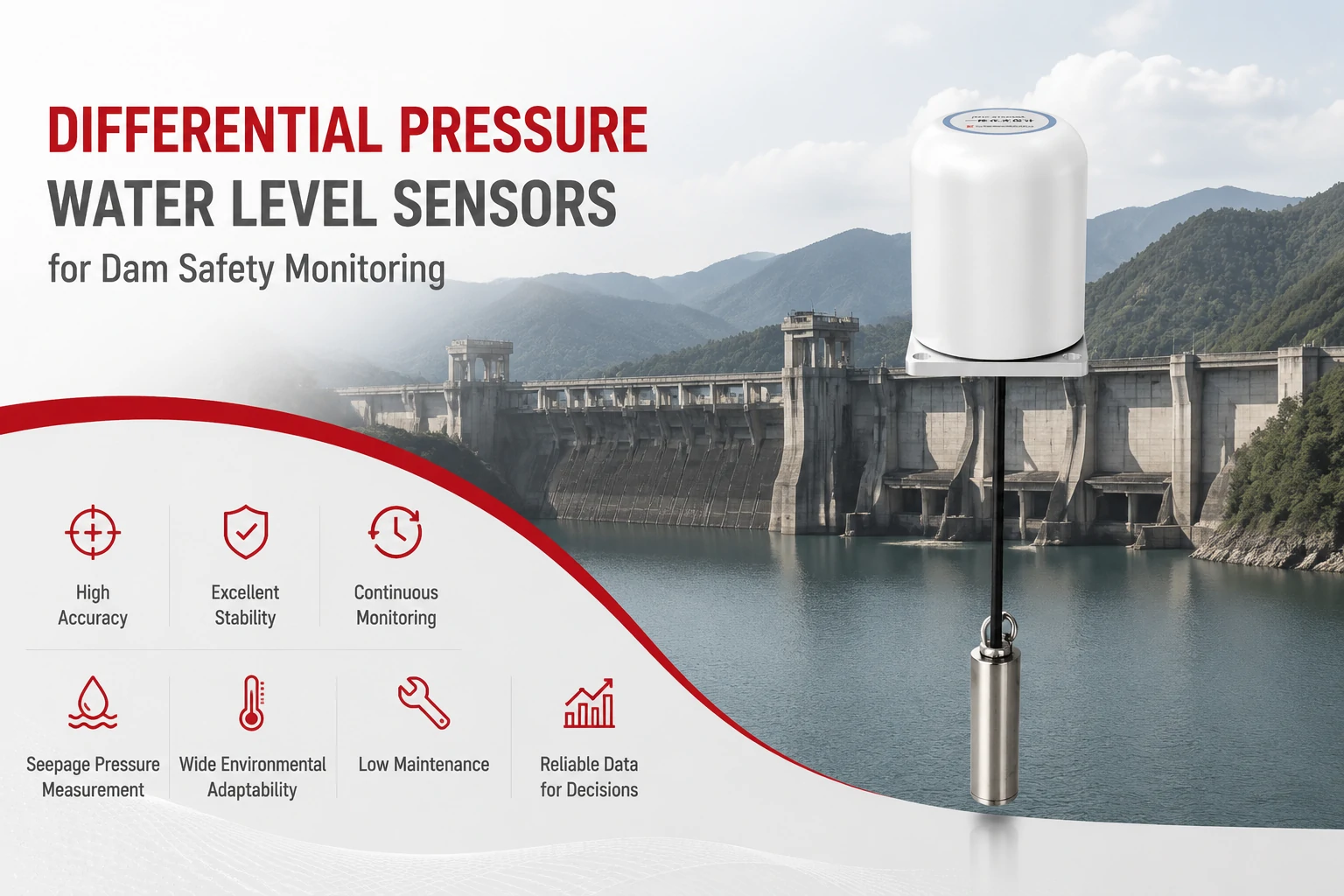
Key Takeaways The strongest fit is usually a confined, submerged, or s...
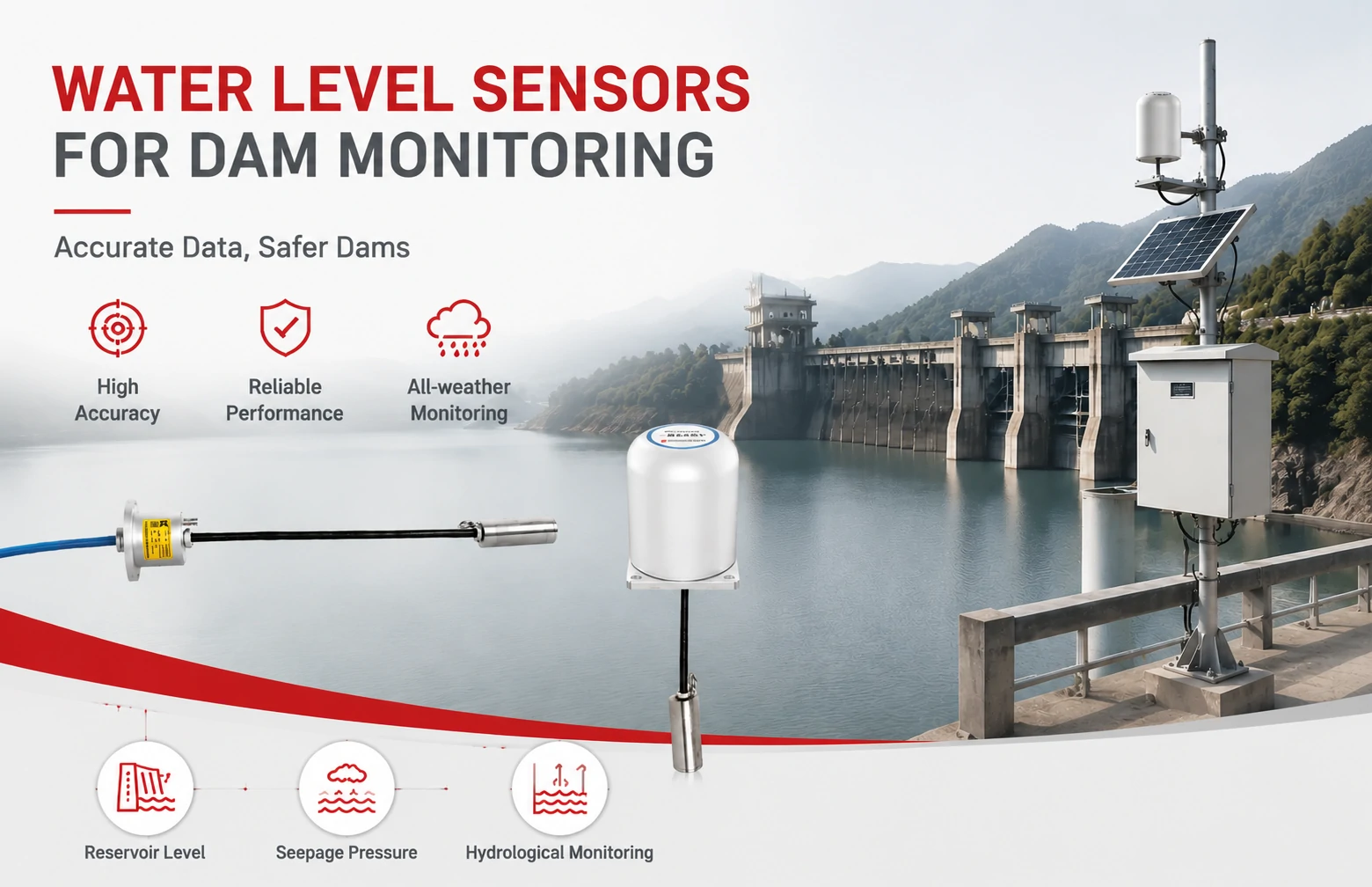
Kingmach Water Level Sensors for Dam Monitoring: A Buyer's Guide to Differential Pre...
Products
FAQ
It shows up in meteorology, hydrology, agriculture, and urban drainage. Anywhere you need automated rainfall totals with reasonable accuracy, a 0.1 mm bucket fits. Its pulse output makes it easy to connect to loggers and telemetry.
The World Meteorological Organization recommends resolutions between 0.1 mm and 0.2 mm for general-purpose rain measurement. 0.1 mm gives you finer data for intensity calculations. Many national weather services use 0.1 mm as their baseline.
Mostly keeping the funnel clean — leaves, bird droppings, and dust can block the orifice. Check that the gauge is level and the buckets move freely. In freezing weather without a heater, it needs draining or winterizing. The reed switch rarely fails if not mechanically abused.
Almost certainly. The gauge outputs a simple contact closure (pulse) each tip. Just about any logger with digital input channels can count those pulses. Kingmach can pre-wire the cable or provide termination diagrams for common loggers.
Under good calibration and installation, expect ±3% at rainfall rates up to 50 mm/h. Heavy downpours may undercatch slightly. The 0.1 mm bucket tends to be more linear than coarser resolutions.
Share your product type, target capacity, and application requirements. Our team can review the details and recommend a practical next step.
If you are interested in our products or want to become our partner.
Please leave your contact information, our team will contact you as soon as possible.
Mail: [email protected]
Contact Us: +8613808434127
Address: No. 188 Tongzipo West Rd, Changsha, Hunan, China