
 EN
EN
 ar
ar bg
bg hr
hr cs
cs da
da nl
nl fi
fi fr
fr de
de el
el hi
hi it
it ko
ko no
no pl
pl pt
pt ro
ro ru
ru es
es sv
sv tl
tl iw
iw id
id lv
lv lt
lt sr
sr sk
sk sl
sl uk
uk vi
vi et
et hu
hu th
th tr
tr fa
fa ms
ms hy
hy ka
ka ur
ur bn
bn mn
mn ta
ta kk
kk uz
uz ku
ku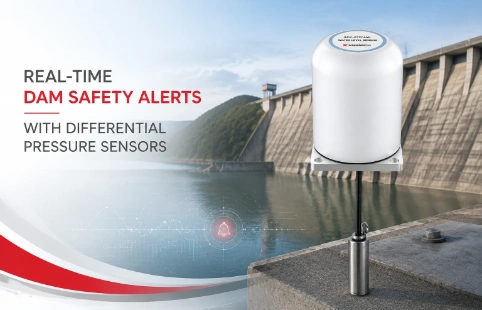
Real-Time Dam Safety Alerts with Differential Pressure Water Level Sensors
Key Takeaways An alert chain needs more than a sensor: define field in...

Inclinometer Gauge for Subsurface Monitoring
One of the most common tools for measuring underground displacements in projects such as slopes, foundation pits or dams is the inclinometer. However, many engineers find that choosing a reliable inclinometer probe and reading instrument is more difficult than understanding the data itself - there are many options on the market, but the accuracy, durability and after-sales service vary. As a mid-range professional geotechnical instrument manufacturer, Kingmach provides a variety of specifications of inclinometers, and its product line covers a complete set of solutions from sensors to acquisition systems. We will not list a bunch of functions you don’t need, but help you find the “sufficient and stable” combination based on the actual needs of the project. The following are some key points and common questions about inclinometer selection, hoping to save you some time in comparison.
Technical Detail
Inclinometers are core tools in geotechnical monitoring and are used to measure deep horizontal displacements of structures such as landslides, retaining walls, tunnel linings, and foundation pit supports. A complete inclinometer system usually consists of a probe, signal cable, reader and data processing software. The inclinometer probes provided by Kingmach mainly include one-way and two-way. The common range is ±30° and the resolution can reach 0.01 mm/m level. The probes are mostly made of stainless steel or high-strength aluminum alloy and can adapt to different hole depths and groundwater conditions. The cable is reinforced with Kevlar, which is lightweight and tensile-resistant, and the length can be customized as needed. The reader supports automatic data storage and USB export, and the accompanying software can generate depth-displacement curves to facilitate analysis of change trends. As a professional manufacturer, Kingmach's core advantage lies in its complete product line, covering everything from basic manual measurement to semi-automatic systems, and the ability to adjust probe diameter, cable connectors or communication protocols according to specific project requirements. We will not use "all-round" as a selling point, but we will ensure that what you get is a device that has been tested and has stable data. The global distribution network and localized technical support also make after-sales response more direct - parts replacement, regular calibration, on-site training, etc., can all be arranged within a reasonable time. If you are looking for an inclinometer with a mid-range price and solid performance, you may wish to start by sorting out a few key parameters, and then combine it with the actual monitoring frequency and accuracy requirements of the project to choose a device that is truly useful.
News
Key Takeaways An alert chain needs more than a sensor: define field in...
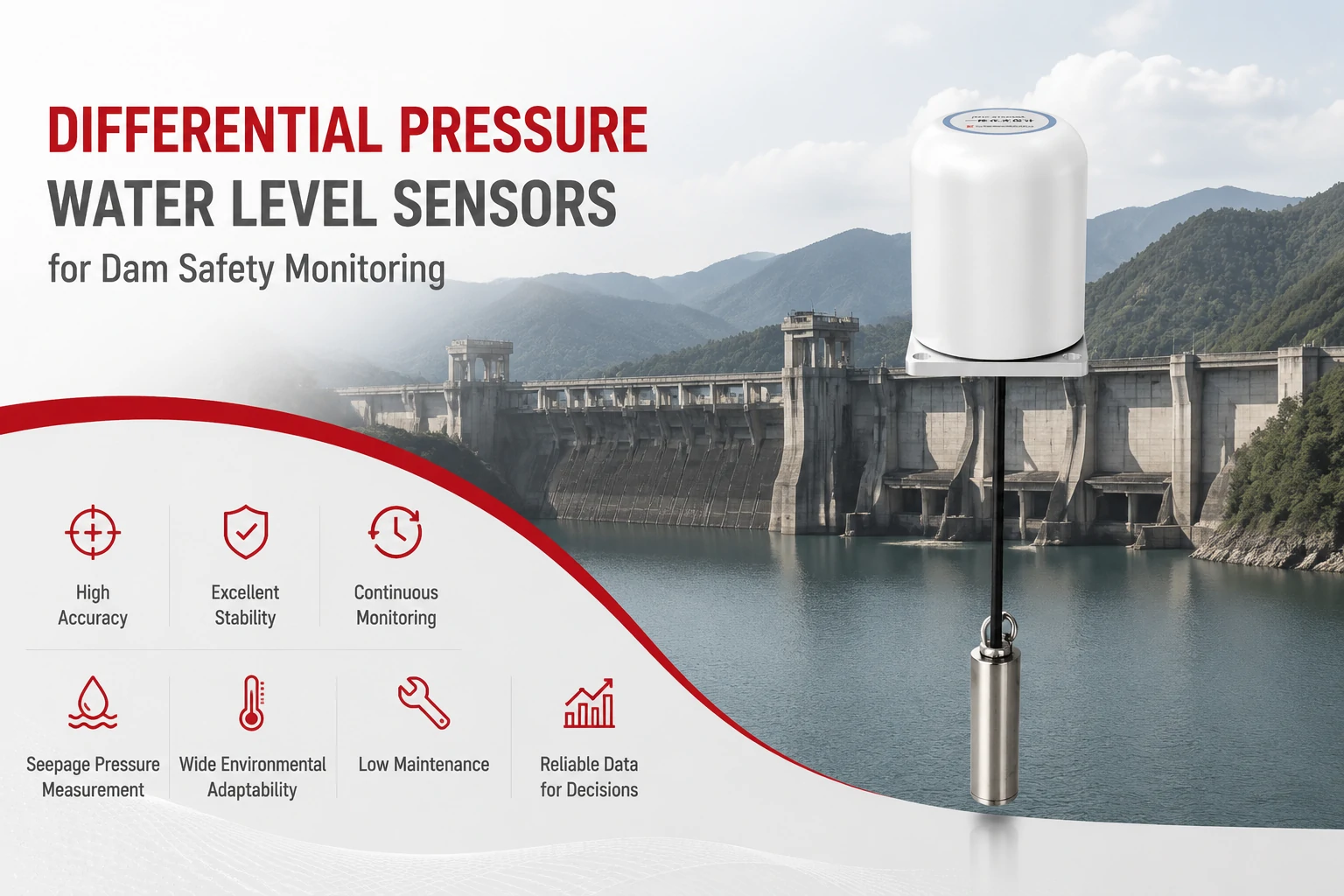
Key Takeaways The strongest fit is usually a confined, submerged, or s...
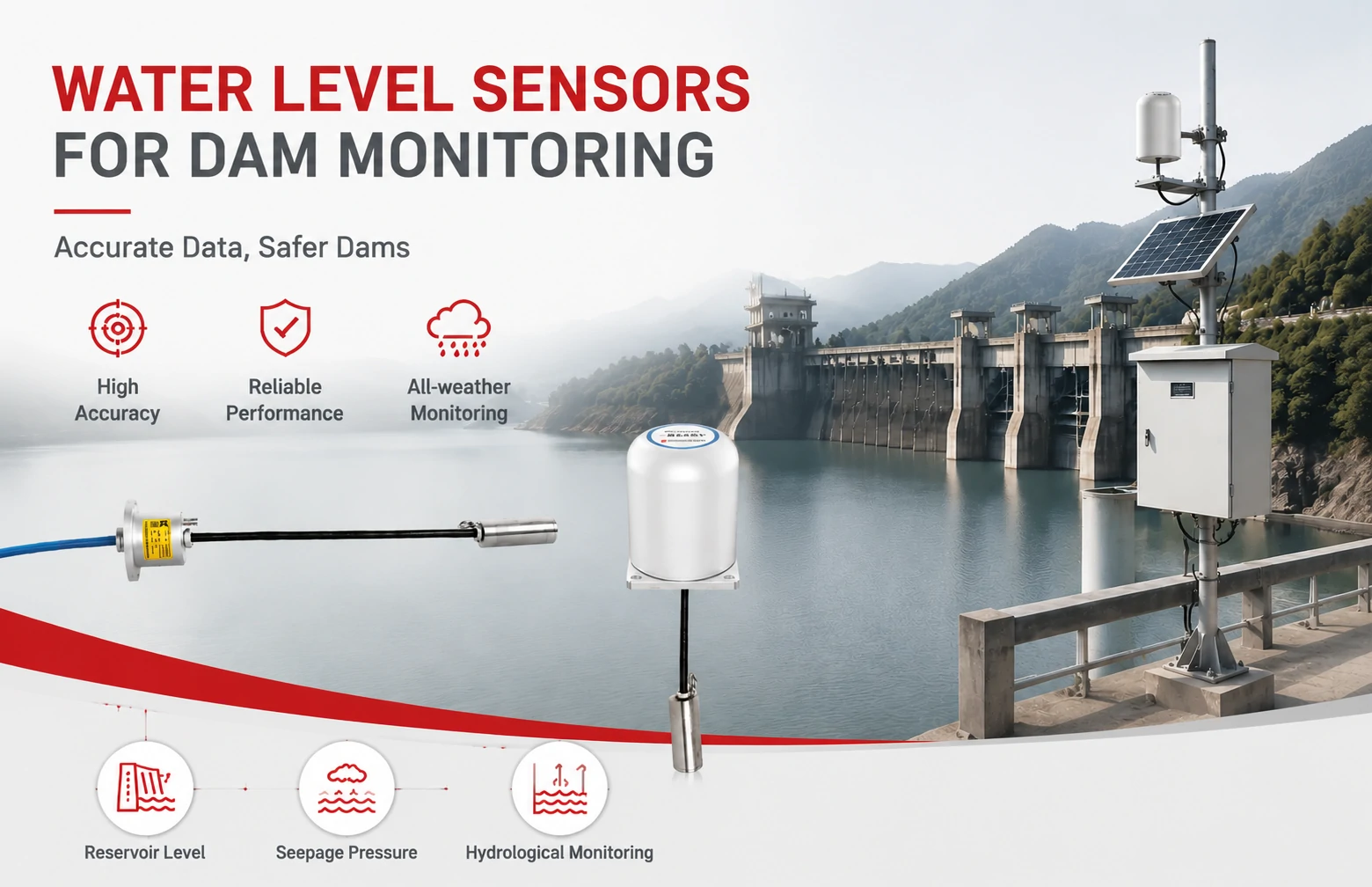
Kingmach Water Level Sensors for Dam Monitoring: A Buyer's Guide to Differential Pre...
Products
FAQ
Simply put, the inclinometer measures the horizontal displacement distribution along the borehole depth direction and obtains a continuous displacement profile; while the displacement meter (such as a fracture meter) usually only monitors the relative displacement between one or two points. The former is more suitable for analyzing the depth of the sliding surface and the scope of the deformation zone, while the latter is used for monitoring the opening of key cracks. The two are often used together in the same project.
Generally, the measuring range of ±30° can cover most slope and foundation pit working conditions. If the estimated displacement is large (such as deep slippage), the measuring range of ±60° can be considered. In terms of resolution, the reading accuracy of 0.01 mm/m can already meet the requirements of conventional monitoring specifications; if the project is sensitive to early micro-deformation, a higher-resolution probe can be selected. When making actual selection, it is best to refer to the allowable deformation values and warning values given by the design unit.
There are several common reasons: the inclinometer tube is twisted or the bottom of the tube is silted, causing the probe to get stuck; the cable connector has poor contact; the reader battery is low; or the probe is not fully warmed up. It is recommended to first check whether the inclinometer tube is unobstructed, use a steel ruler to measure whether the depth of the probe is consistent with the reading, and then use a set of spare batteries to measure again. If it is still unstable, the electronic components inside the probe may need to be calibrated.
This depends on the interface and communication protocol. Our standard probes use universal four-core or six-core connections, and their outputs are mostly voltage or current signals. Many third-party readouts can also be adapted. However, in order to ensure accurate data and complete functions (such as temperature compensation algorithm), we usually recommend using the original reading meter. If there is indeed a need for mixed use, please inform us of the specific model in advance and we can evaluate compatibility.
A common oversight is that the backfill is not dense, causing the inclinometer tube to bend as the surrounding soil settles, and the data does not reflect true deep displacement. During installation, ensure the verticality of the drill hole, tighten and seal the pipe joint joints with screws, and backfill the space between the outside of the pipe and the hole wall with fine sand or special slurry. The bottom of the pipe generally needs to be fixed to prevent it from floating up. If it crosses multiple strata, it is best to set up segmented grouting outside the pipe to avoid hole collapse.
Share your product type, target capacity, and application requirements. Our team can review the details and recommend a practical next step.
Related Keywords
If you are interested in our products or want to become our partner.
Please leave your contact information, our team will contact you as soon as possible.
Mail: [email protected]
Contact Us: +8613808434127
Address: No. 188 Tongzipo West Rd, Changsha, Hunan, China