
 EN
EN
 ar
ar bg
bg hr
hr cs
cs da
da nl
nl fi
fi fr
fr de
de el
el hi
hi it
it ko
ko no
no pl
pl pt
pt ro
ro ru
ru es
es sv
sv tl
tl iw
iw id
id lv
lv lt
lt sr
sr sk
sk sl
sl uk
uk vi
vi et
et hu
hu th
th tr
tr fa
fa ms
ms hy
hy ka
ka ur
ur bn
bn mn
mn ta
ta kk
kk uz
uz ku
ku
Intelligent Weir Flow Meter
Kingmach Intelligent Weir Flow Meter turns a small water level change into a usable flow trend. Many water projects do not need only a single discharge value; they need to know whether flow is rising, falling, delayed after rainfall, reduced after sediment build-up, or affected by upstream operation. The weir point gives a control section, while the water head record gives the time-based signal. Engineers can then compare flow with rainfall, gate operation, pump status, drainage reports, seepage observation, or field inspection. This makes the record useful for operation and diagnosis. A flow increase during rain may be expected, but a flow increase during dry conditions may need attention. A slow decline may point to blockage or changed channel conditions. The product information can make these review paths clear without presenting the meter as a standalone device. The field record should explain the water path, the condition before the reading changed, the inspection access, and whether nearby operations or weather events affected the channel. This keeps the flow curve connected to real site behavior rather than leaving it as an isolated number. A practical review also checks whether the measuring section remained clean and hydraulically stable. Sediment, debris, vegetation, downstream backwater, or a disturbed approach can change the meaning of the same water-head reading, so those conditions belong in the project notes.
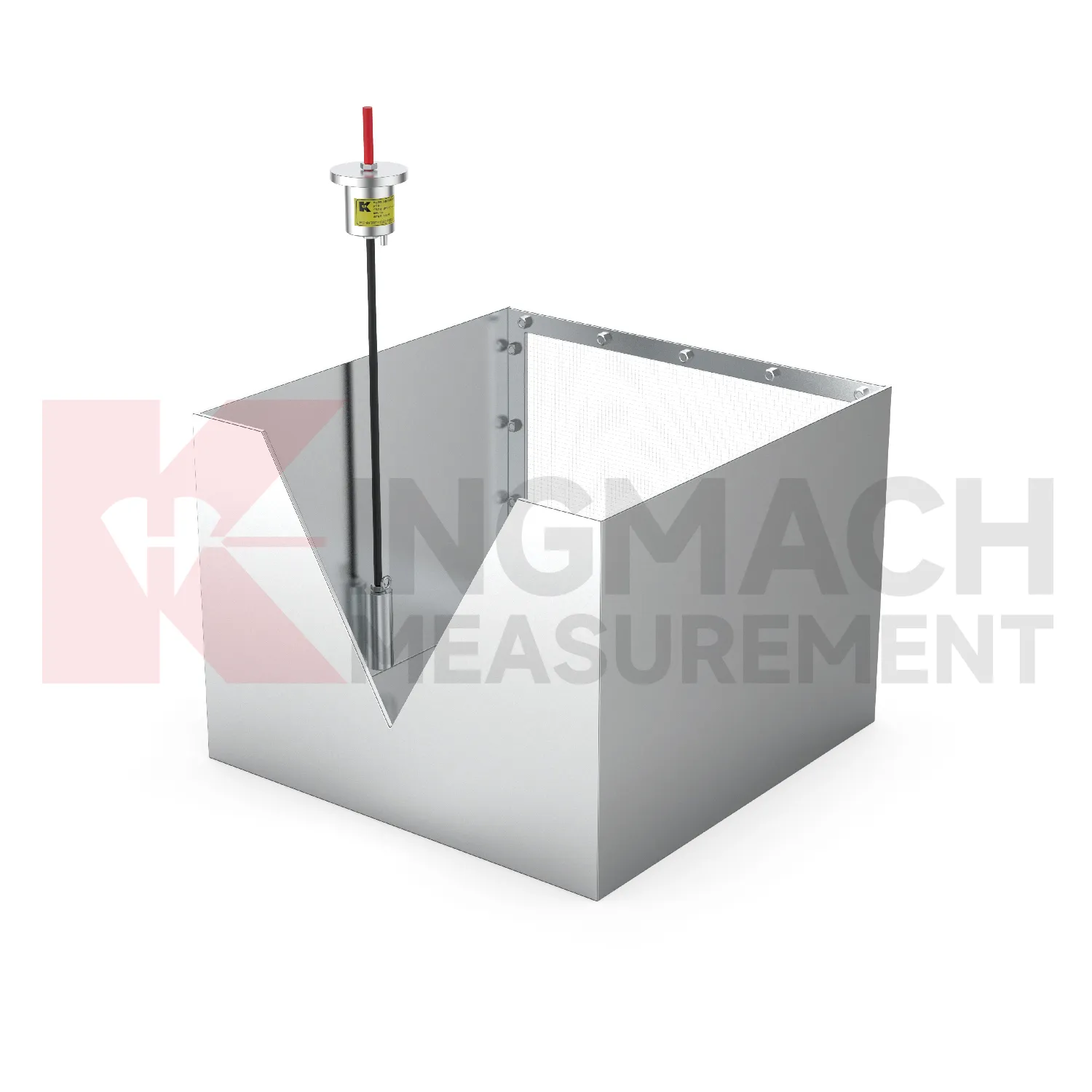
Application of Intelligent Weir Flow Meter
Industrial water management uses Kingmach Intelligent Weir Flow Meter where liquid flow through an open channel or controlled measuring section must be tracked. The site may need to monitor process water, cooling discharge, drainage, or controlled outflow. Flow records should be reviewed with operating schedules, equipment status, cleaning events, and water quality observations when available. The measuring point should avoid turbulence from nearby bends, drops, or inflow disturbances if the record is expected to represent stable channel behavior. Maintenance teams should keep access to the crest and water head location. When the data is connected to operations, the flow curve can show whether the process is stable, restricted, or affected by maintenance. Industrial sites often need records that different departments can read without argument. Operations staff may focus on timing, environmental staff may focus on discharge documentation, and maintenance staff may focus on cleaning or obstruction. A dated weir record gives these groups a shared basis for review. If process activity changes, the note beside the curve should explain what happened so the flow trend remains tied to real plant behavior. The same record can support permit discussions, internal audits, and maintenance planning when channel condition affects measured discharge. across operating teams. consistently.
The future of Intelligent Weir Flow Meter
Compatibility will remain important for future Kingmach Intelligent Weir Flow Meter. A flow point needs a physical measuring section, water head record, enclosure, power, communication, platform channel, and maintenance route. If these parts are not planned together, the site may produce data but remain difficult to operate. Future specifications should describe the workflow: how data is collected, how alarms are reviewed, how cleaning is recorded, and how flow is compared with related site conditions. This workflow view is more useful than naming hardware alone. It helps owners keep the measurement working through installation, operation, repair, and handover. The next generation of projects will also need cleaner links between field staff and office reviewers. A technician should be able to attach notes, photos, access issues, and cleaning records to the same monitoring point that engineers use for reporting. That shared record reduces confusion when equipment, platform settings, or site responsibilities change over time.
Care & Maintenance of Intelligent Weir Flow Meter
Calibration and verification for Kingmach Intelligent Weir Flow Meter should be treated as part of operation. The team should compare the flow record with visible site behavior, maintenance notes, and any manual checks used by the project. Verification does not always require a complex procedure; sometimes it means confirming that water passes the crest cleanly and that the recorded trend matches the observed condition. If a repair, cleaning, or channel modification occurs, a post-work check should be saved. This keeps the measurement defensible when flow data is used for reports, water accounting, or operating decisions. Verification notes should record who checked the point, what reference was used, whether the channel was stable, and whether unusual weather or upstream activity affected the reading. A dated note beside the data curve is often more useful than a vague pass or fail mark. It helps reviewers understand the field condition before comparing monthly totals or investigating a sudden shift.
Kingmach Intelligent Weir Flow Meter
Kingmach Intelligent Weir Flow Meter helps engineers understand open-channel flow as a site behavior, not as a number copied from a gauge. In drainage channels, water conservancy works, tunnel discharge points, irrigation structures, and water supply or drainage projects, flow changes can show whether inflow, outflow, leakage, runoff, or operating control has changed. A weir-based measurement point turns water head into a repeatable flow record when the crest, approach channel, water level reference, and data path are handled carefully. The strongest value is traceability: teams can compare flow before a storm, during a control action, and after the site returns to normal. That record helps with water resource management, operational review, and maintenance planning. The field record should explain the water path, the condition before the reading changed, the inspection access, and whether nearby operations or weather events affected the channel. This keeps the flow curve connected to real site behavior rather than leaving it as an isolated number.
FAQ
Q: What site conditions affect flow readings?
A: Sediment, debris, turbulence, backwater, algae, damaged crest edges, poor approach flow, and changed channel geometry can all affect the record.
Q: Why is cleaning important?
A: Cleaning keeps the control section clear so the water head record continues to represent the intended flow relationship.
Q: How should abnormal flow changes be reviewed?
A: Check rainfall, upstream operation, downstream condition, cleaning history, enclosure status, and field inspection notes before drawing conclusions.
Q: Can flow monitoring be remote?
A: Yes. Remote monitoring is useful when continuous records are needed or when the site is difficult to access during storms or operation.
Q: What should be recorded at installation?
A: Record channel location, flow direction, weir condition, water head reference, cable route, enclosure position, cleaning access, and first stable reading. The strongest flow reports are written around decisions. They show whether to keep observing, clean the channel, inspect upstream conditions, check downstream backwater, or compare the point with another water-level or rainfall record.
Reviews
Andrew Lee
The visualization software is intuitive and powerful. It helps us analyze monitoring data efficiently.
Ryan Lewis
Fast delivery and excellent product quality. The accelerometers and tiltmeters are highly reliable. Strongly recommend this company.
Latest Inquiries
To protect the privacy of our buyers, only public service email domains like Gmail, Yahoo, and MSN will be displayed. Additionally, only a limited portion of the inquiry content will be shown.
Charlotte***@gmail.comUnited Arab Emirates
Hi, we require instrumentation cables suitable for harsh environments. Could you advise on specifica...
Mia***@gmail.comNetherlands
Dear team, we are interested in your readouts & data loggers compatible with multiple sensors. Do yo...
Related product categories
- Intelligent Weir Flow Meter
- Smart Weir Flow Meter
- weir flow meter
- weir type flow meter
- weir flow meter Price
- weir flow meter Manufacturer
- weir flow meter Supplier
- weir flow meter Solution
- weir flow meter System Integration
- weir flow meter Localization
- weir flow meter Domestic Manufacturing
- weir flow meter China